Meg's Butternut Squash Soup

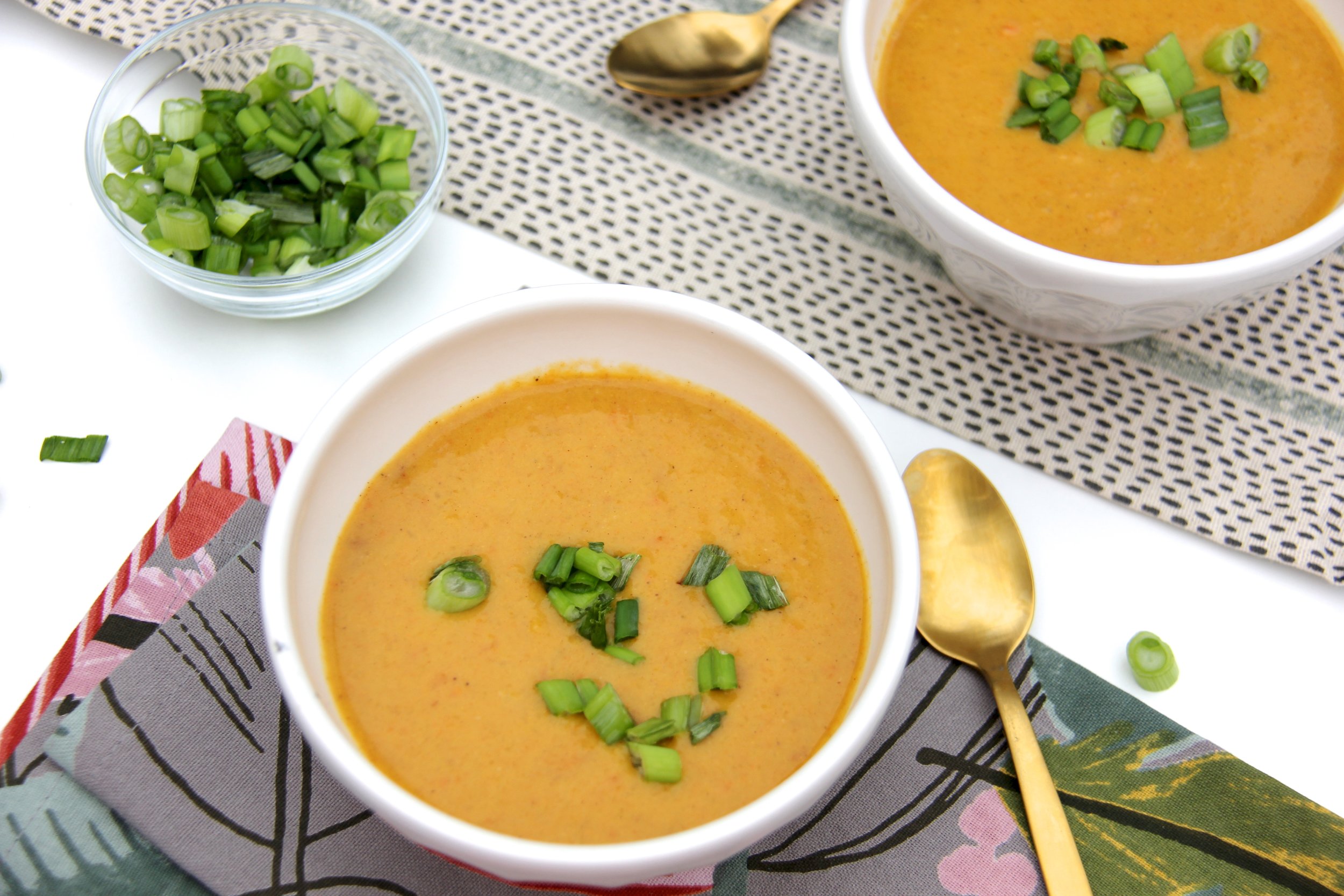
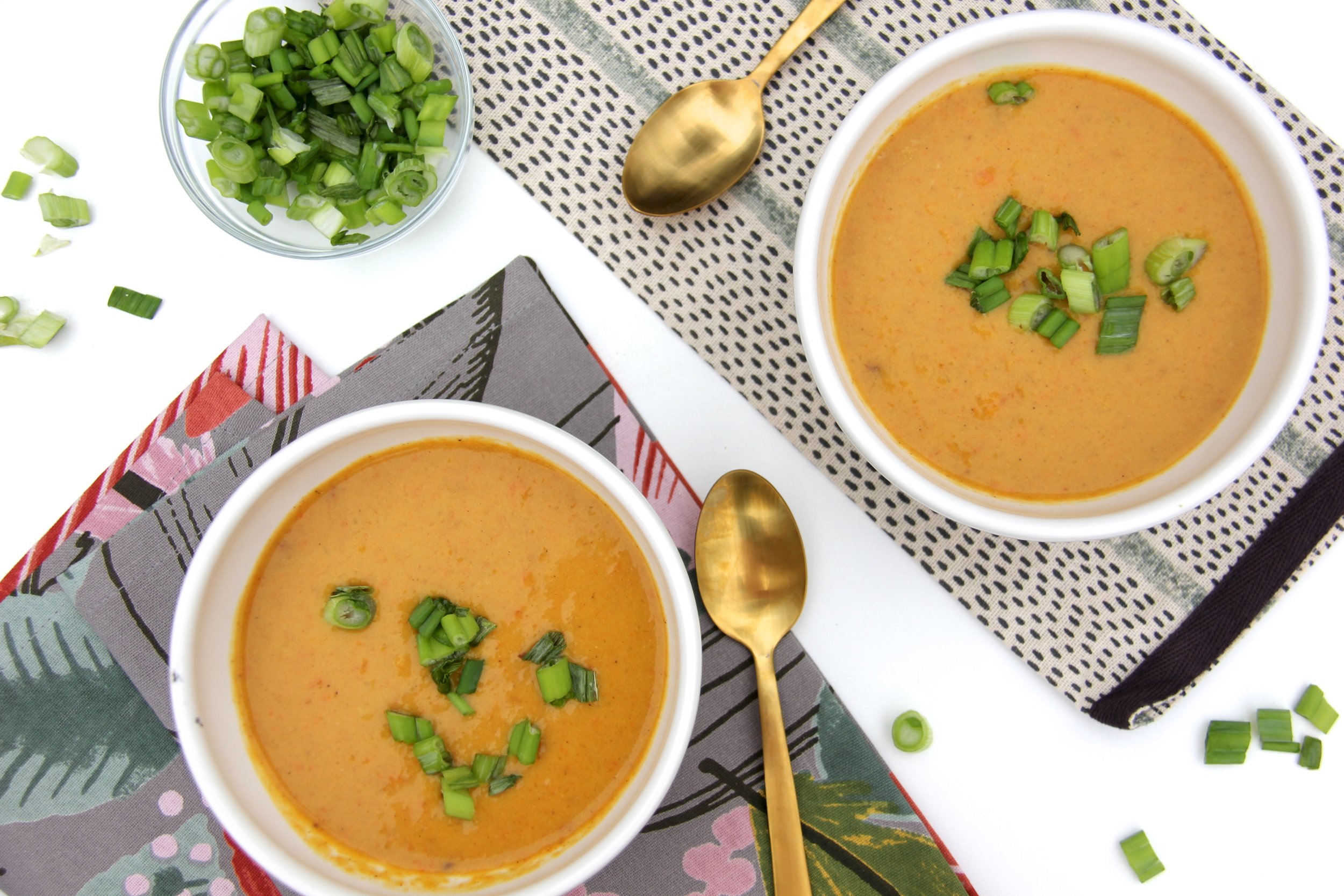
The creamiest (using no cream) fall soup in the books! A must try! My fall-loving self couldn't resist whipping this up the other day while I waited for my sweetheart to get home from late night class... and he loved it. Give it a try. This recipe yield ~7 cups and you can freeze for later use as well!

1 medium - large butternut squash (about 2 lbs.), cubed

4 medium carrots, kept as is *you can also use a half of a small bag of baby carrots

1/2 large onion, diced

2 Tbsp. avocado oil

salt and pepper, to taste

3 1/2 -4 cups chicken stock (*start with 3 1/2 and you can always add more in later if your soup is too thick)

3 cloves garlic, crushed

2 tsp. cinnamon (*if you don't want the cinnamon taste too strong, start with 1 1/2 tsp.)

1/4 tsp. nutmeg

1 can lite coconut milk

green onions, chopped

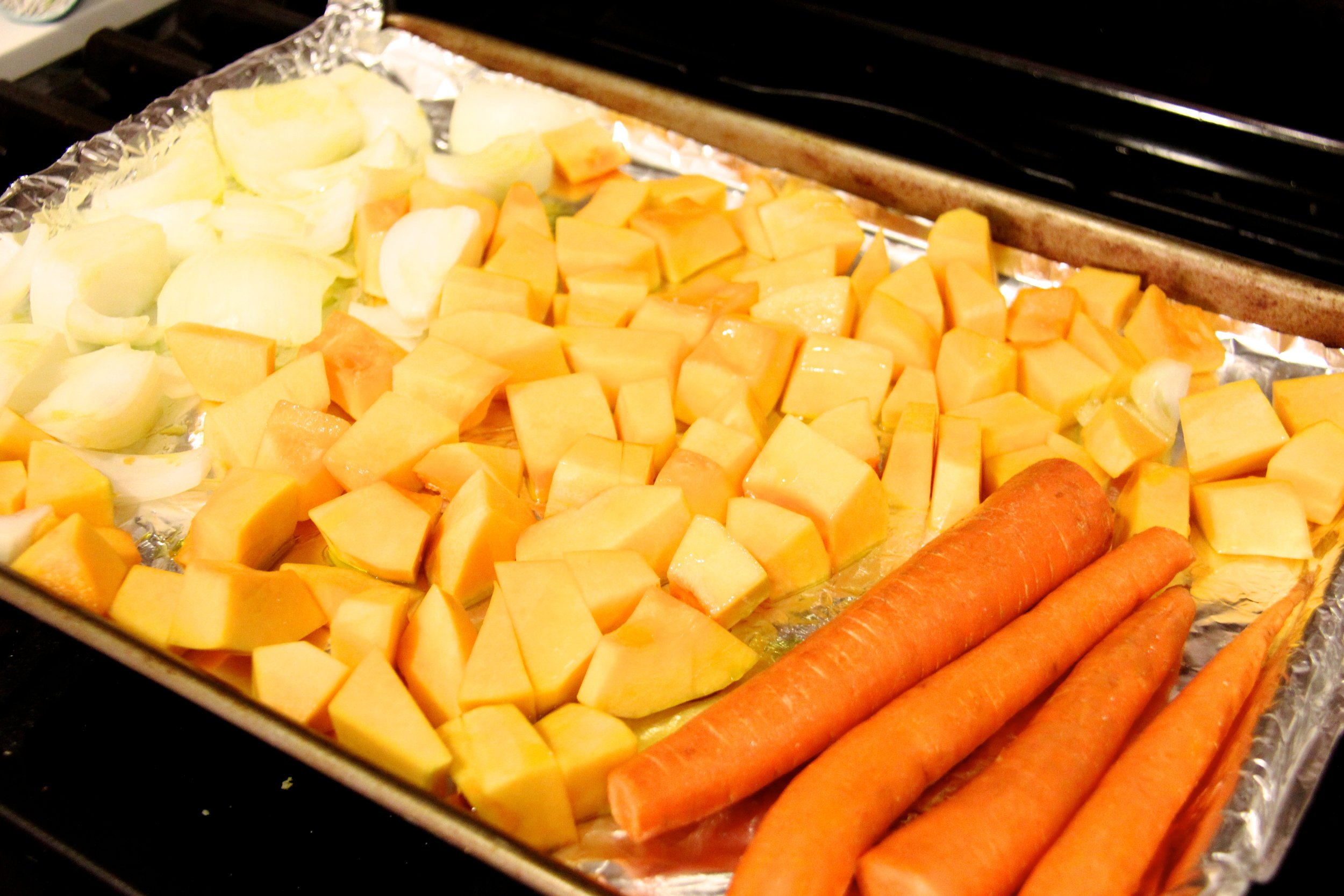
1. Preheat oven to 425 degrees. Place tin foil over a baking sheet. Arrange cubed butternut squash, onion, garlic and carrots on baking sheet. Half of the sheet should consist of butternut squash, about a third filled with onions, and then the carrots to the side (picture below). Drizzle lightly with avocado oil and salt and pepper. 

2. Bake veggies for 30-40 minutes at 425 degrees, or until starting to brown and soften.

3. Pour chicken stock into blender along with roasted veggies when they are all cooked. Blend until smooth (on the "soup" setting if you have a Blendtec). Pour blender contents into a large stockpot on the stove. Add cinnamon, nutmeg, coconut milk, and pinch of salt and stir gently. Heat on medium heat until ready to serve.

5. Garnish with green onions, if desired.

ENJOY THE CREAMIEST FALL SOUP IN THE BOOKS.

Smoothies for Kids

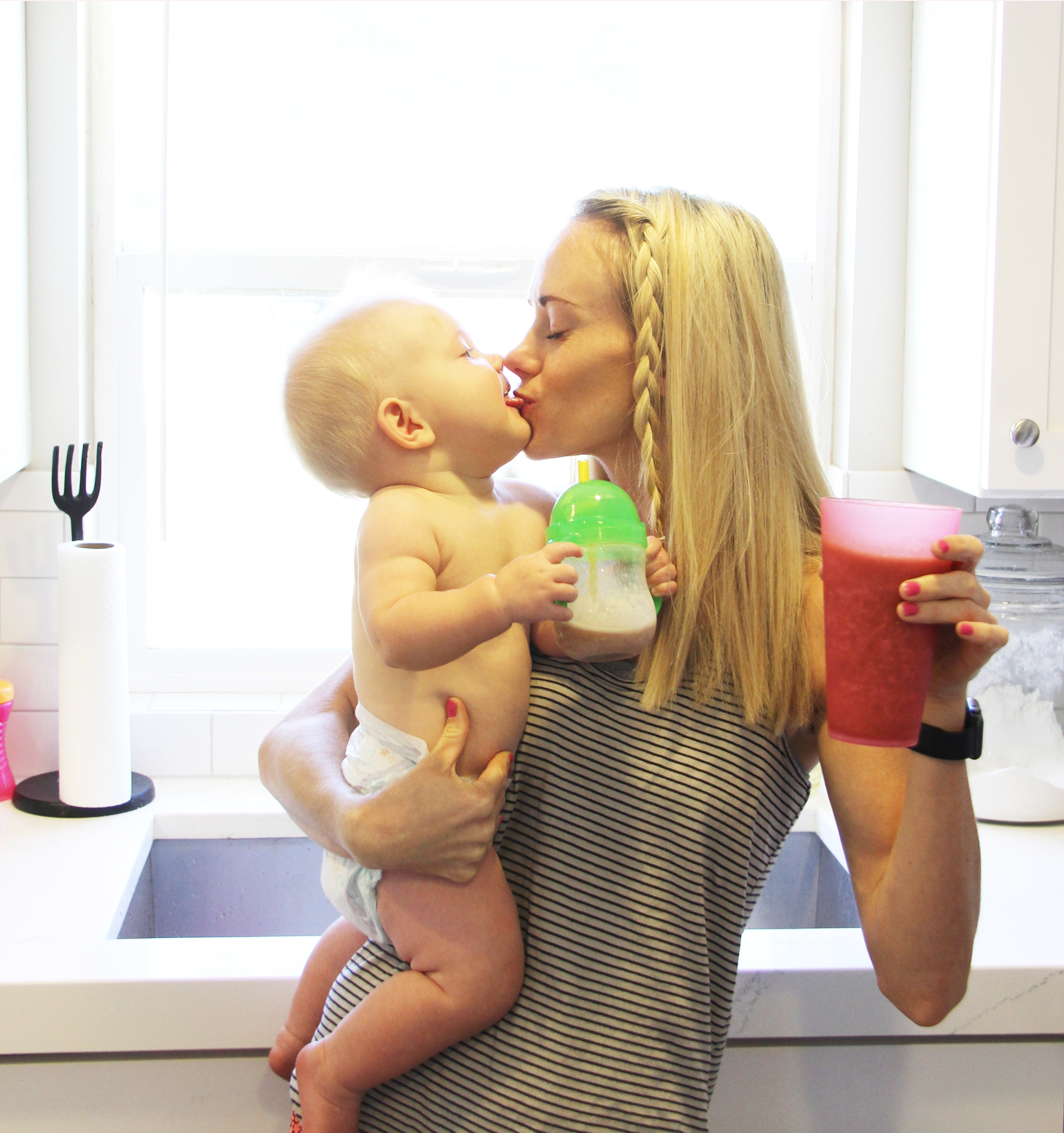
I've had a few questions about this topic, so I thought it would be a helpful thing to discuss. Smoothies for kids... what to put in them, protein powder or no protein powder, how to avoid so much natural sugar from fruit... the list goes on. I love incorporating smoothies into my day, and especially for my one year-old, because I can pack a whole lot of nutrients in one small glass. She goes crazy for them, and I feel like it starts off her day with a boost of good, nutritious energy.

I'm not a nutritional expert by any means, and these questions don't just have one right answer, but here are some of my tips for building smoothies for kids. Remember this post I'm specifically talking about smoothies for kids. (If you ever want me to do a post about smoothies for adults and what I include in my smoothies, let me know!)

1. Start with ingredients you know they'll love:

My little Ellie loves bananas and eats them by the whole every day. I always know if I throw half a frozen banana in there, it has a strong enough flavor to pop out over some of the other things, and she'll gulp it down. When I'm doing a fruit smoothie or even a chocolate/peanut butter smoothie, I almost always add a half of a frozen banana to the mix. Any time she hears the Blendtec going, she always comes over to see what I'm making. I think she secretly hopes it's going to be a smoothie. Now that I have her hooked, I feel like I can add in some more of the foods she might not have liked in the beginning (spinach, carrots, chia seeds, etc.). I usually just make sure the consistency is runny enough to easily sip through her straw on her sippy cup. Sometimes she can get frustrated when it's too thick. :)

2. Watch the quantity:

This is something I often tell adults. If you to take everything you just put into your smoothie and spread it out on a plate... would you eat that much? Would you really eat an entire banana, handfuls of other frozen fruit, yogurt, honey, chia seeds, half a plate of spinach, etc in ONE sitting??? I don't think so! I used to have a coworker who came into work with the most giant green fruit smoothie I've ever seen. Some people would say, "Geez, you're always eating so healthy." In my mind, all I was thinking was, 'I wonder if she really understands how much food and sugar she is eating for breakfast right now.' Fruit contains a lot of natural sugar, so try to keep it limited in your smoothies. Don't get me wrong, we LOVE our fruit smoothies around here, but just be conscious of how much you're putting in. It helps me to imagine it out on a plate, and keeps my portions more controlled.

3. Make it a family thing:

When I make Ellie a smoothie, I am having one too. She tends to drink the whole thing when she knows I am by her side drinking it with her. She is really into doing "cheers" right now and banging her cup into mine before she takes a sip, so I happily oblige. I truly believe that eating healthier is something that would be so hard to do alone. If you involve your entire family in the process and get those kids involved, it becomes something fun for everyone. Get them involved. Have them make smoothie bags with you to put in the freezer on meal prep day, have them choose and experiment with different flavors, put on "Smoothie Week" at your house where each kid gets to choose a flavor of smoothie to try... be creative! Make it fun, and your kids are bound to get on board.

4. Play "Hide 'n Seek" with the greens and veggies:

I always add greens or some sort of vegetable to Ellie's smoothies, and I don't think she'll ever know. The darker the greens, the more nutritious. I usually use spinach and sometimes kale. I love it because I'll buy it for the week for my salads, and freeze all the leftovers. It lasts in the freezer for weeks, and I will always add a handful in. If you have picky eaters, there's your chance to sneak in some good veggies. I also have tried adding carrots, celery, kale, cucumbers, and ginger. Give it a try and be brave!

5. Smoothie popsicles:

If it's a "texture thing" for your kids, try smoothie popsicles! All you need are those cheap popsicle molds you can get at the dollar store. Make your smoothies, pour them in, and enjoy them frozen. I mean, what kid can argue with getting a popsicle for breakfast? I don't know of many who would. This also might make it easy to grab on the go, especially if you have kids running late for school in the morning.

6. BE CREATIVE and mix it up:

I hardly ever make the same smoothie twice in a week. I love to experiment. Some are better than others, but you never know until you try! Some things we like to add are healthy fats like natural nut butters: peanut and almond butter and avocados. Some of our favorite fruits to add to smoothies are bananas, mangos, strawberries, raspberries, blueberries, pineapple, and pomegranates. When I do fruit smoothies, I usually add greens, some plain non-fat Greek yogurt to the mix, water, ice, a small scoop of chia seeds and a small scoop of frozen orange juice concentrate. I never use juice for my liquid base- too much sugar. Opt for water or almond milk. When I do chocolatey or peanut butter smoothies, I love adding a small amount of raw cacao and almond milk, a half a frozen banana, a scoop of peanut butter or powdered peanut butter (less fat and good amount of protein), and ice to thicken.  I've heard mixed things about raw cacao in young children. My advice is if you want to use it, use it in smaller amounts. Also, honey is something that is not recommended for children under age one, so sweeten it up with fruit instead. 

7. Build it in style:

START WITH A LIQUID:

I like starting with a liquid because it goes in at the base of my blender where I know my blender will mix more easily when it's at the bottom. I'd try to avoid fruit juices for your liquid and opt for milk, almond milk, water, or coconut water. 

CHOOSE YOUR NUTRITIOUS CONTENT FOR TEXTURE:

To get some creamy texture, try adding some nonfat plain Greek yogurt, avocado, nut butters, frozen fruit, vegetables, and/or ice. I find that when I add too much ice, my smoothie is more grainy. I like mine creamier and so I go easy on the ice and I usually add it in the end if the smoothie needs some thickening but I don't want the extra calories. 

ADD-ONS:

Sweeteners fall under this category. Sometimes my smoothie just isn't quite sweet enough and so I'll add a drop of vanilla stevia, or some pure maple syrup, or some honey. These can enhance the flavor quite a bit with only a small amount. I've even heard of people adding a dash of real sea salt for some healthy minerals.

I usually always sprinkle some chia seeds on top for extra fiber (this can be especially great for any of your kids who struggle with constipation). Other add-ons we like are unsweetened coconut, oats, and ground flaxseed.

Here's my deal with protein powder for kids.. first of all, this topic is very controversial in the health and nutrition industry. Bottom line: every kid is different, and there are TONS of different kinds of protein powders out there. My advice is to ask your pediatrician what they would recommend. If they don't know, they'll refer you to someone who does. You might have a teenager who is engaged in competitive sports and expending a huge amount of energy throughout the day... they might benefit from some extra protein. Some kids require higher amounts of protein, even than adults, and some kids require much less. I have a cousin whose son has PKU or Phenylketonuria and needs to limit his protein intake drastically throughout the day or else it leads to serious health problems. So bottom line: ask your doctor.

I've let Ellie have some of my smoothies with protein powder in them before, but most times I leave hers without and I'll add it in mine when I feel I want it. That's just my personal philosophy. There's nothing wrong with an occasional smoothie that includes a scoop of protein powder in it, but the problems occur when that becomes the only source your kids are getting their protein from. Our whole foods can and should give us all the protein we need throughout the day, and that's the best source we can get it from: eggs, nut butters, yogurt, cottage cheese, etc. So for Ellie's smoothies, I stick with whole foods for protein rather than protein powder. 

I hope this post was helpful for some of you. Good luck with your smoothie-making and let me know how it goes!!

Butternut Squash Pita Tostadas

An all-around winner for my family! With the perfect combination of flavor for each bite, I know this recipe will be on repeat this fall!

Serves 6-8

Ingredients:

1 large butternut squash, split vertically and seeds removed **read below for a small family tip!

(*Since I was cooking for my small family, I only ended up using half of the squash mixture and cut the rest of the recipe in half to make 4 servings, rather than 8. I baked both sides of the squash, used half to mash for our pitas, and then saved the other half to dice up and use as a side for the next day.) 

extra-virgin olive oil

1 teaspoon cumin

1/2 teaspoon chili powder

real salt, to taste

1 tablespoon maple syrup

6-8 whole wheat pita breads (6-inch)

1 can black beans, rinsed and drained

juice from 2 limes, divided

1/4 cup nonfat plain greek yogurt

2 avocados, sliced

garnish: chopped cilantro and pumpkin seeds

Instructions:

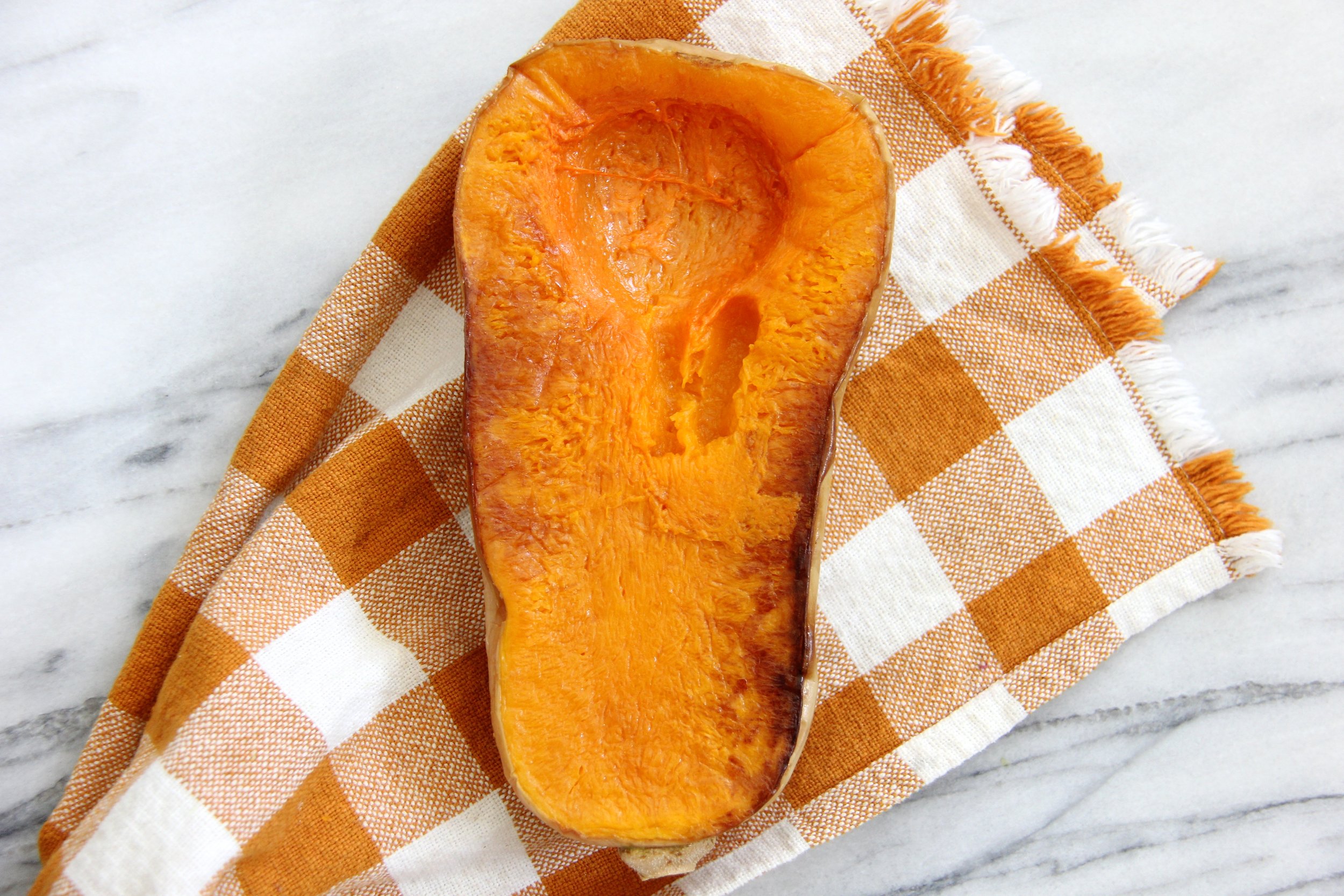
  1. Preheat oven to 400 degrees. Cut the butternut squash down the long way and scoop out seeds. Brush lightly with olive oil on all sides and place on foil-lined baking sheet, flesh side down. Bake for 45 minutes or until tender. Set aside and begin to let cool.
  2. Once cooled slightly, mash squash in a medium bowl together with cumin, chili powder, salt, and maple syrup. Mix well. 
  3. Turn off oven. As it cools, place pita bread on a baking sheet and bake for 5-8 minutes or until golden brown and slightly crispy on the edges. Remove from heat.
  4. While pita bread is in the oven, mix beans in a small bowl with half of lime juice and a pinch of salt. Drizzle olive oil over top and mix. In a separate small bowl, mix the other half of lime juice with yogurt, and add a little water if needed to get a consistency that can be drizzled. 
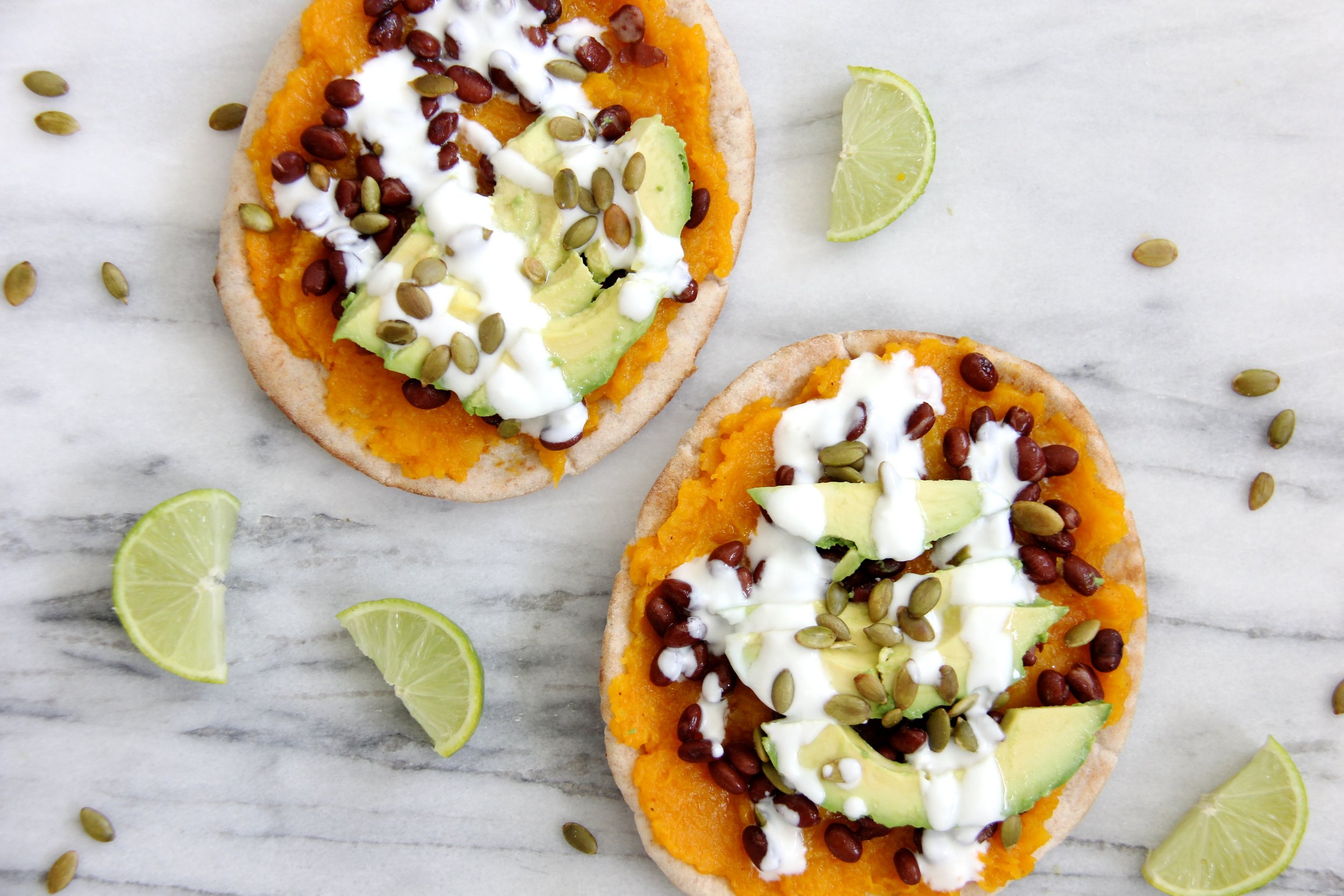
  5. On each toasted pita, spread a scoop of the butternut squash mixture, a scoop of black beans, and avocado slices. Drizzle with the yogurt mixture and garnish with cilantro and pumpkin seeds if desired. A pinch of salt for the top, and enjoy!!!

Recipe from www.camillestyles.com

Becky

I entered Becky’s office on a sunny morning and immediately felt her warmth wrap around me. Her guide dog Georgina, or “Georgie,” wagged her tail as we found a cozy place to talk. We made our way upstairs as Becky greeted everyone in the office and entryway, and found a quiet room.

Becky Andrews has a condition called Retinitis Pigmentosa, a condition causing retinal degeneration. Over the course of her lifetime, Becky has slowly watched her vision narrow and deteriorate. At the beginning of our interview, she handed me some goggles to put on and said, “This is what I can see now.” The majority of the goggle lens was black, except for a tiny, 1 cm fuzzy circle I could see through. I could barely make out her face across from me. As we talked that morning, so many words and thoughts spoke directly to my soul. One being that, as we went throughout the interview, I realized that by being able to see, sometimes I was the one with a disability. Our vision is so easily accessed. We see without even trying. And sometimes being able to see can often “blind us” from noticing everything else around us.

Since our interview, I’ve tried several days to focus solely on tapping into my other senses: appreciating the way the laundry aisle of the grocery store smelled, the way the sunlight bounced off my windshield and warmed my skin while driving home from the park and the way that made me feel, the sounds of my family laughing and singing around the piano on a Sunday evening, the salty taste of kissing a tear off of Ellie’s cheeks as she sought comfort. What a beautiful world it can be when we start to live more in the moment and recognize all that is happening around us.

I know you’ll enjoy this interview.

Tell my readers a little bit about your family.

My husband Steve and I grew up in Cache Valley.  We moved to Salt Lake area about 25 years ago. We raised our family in Centerville and have been here in Bountiful for about 12 years.  Steve and I and our kids Natalie and Kendall all graduated from Utah State University. Natalie received an MBA from University of San Diego and now lives in Washington D.C. and is a reporter for the Wall Street Journal. Kendall is in Hawaii and he’s working on his Masters Degree in International Relations.

When the kids were little, I had to quit driving. At first it felt like my world was shrinking.  I wanted them to have all the opportunities and know the world was big in spite of the challenges of transportation and getting them to their many activities. So now when they’re on the other ends of the country and I think, Oh I wish you were both closer… I realize it’s just what I wanted them to do:  to explore and to know they could do whatever and go wherever they wanted to go.

Tell me a little bit about Retinitis Pigmentosa (RP) and when that all began for you? Also, describe your first reaction after hearing the news.

[From Becky’s book, Look Up, Move Forward: My Journey of Losing Vision and Finding Resilience]

“It was Halloween. As usual, I was carrying a flashlight. As usual, it was bigger than the flashlight I’d carried the year before, proof of my parents’ diligent efforts to find something to help me see better at night. We didn’t know why I had poor night vision… There were bumps in the sidewalk I couldn’t see and porch steps that seemed to materialize from nowhere. During the day, I had 20/20 vision, as confirmed by many trips to the ophthalmologist, but things just seemed to disappear in the dark. A few years earlier, at my first dance review, I panicked when we had to run backstage after our number. I couldn’t understand how the other girls could possibly know where to go in that pitch dark, but somehow they all seemed to manage just fine… I had a nagging, come-and-go kind of feeling that something wasn’t quite right. I often wondered critically, What is wrong with me?”

It wasn’t until college and dating my husband now, that I was finally diagnosed with Retinitis Pigmentosa. “As the disease progresses, the cones, responsible for central vision and color perception, would be affected, leading to tunnel vision and ultimately, complete vision loss.

“Suddenly, my childhood challenges made sense—the missed volleyballs and softballs, the terrifying darkness after dance reviews, the clumsy award at Girls’ Camp, and my confusion about how others detected an oncoming handshake. The diagnosis was more of a relief than a burden. I knew why I’d never seen the stars and why I hated haunted houses. Suddenly, the past made sense. And while the future sounded rather grim, it seemed awfully far away.

“Though the long-term outcome was unsettling, the gift of understanding the past countered my concern for the future. Steve [my husband now] listened compassionately, with characteristic interest and kindness. He was respectful, and I felt that he cared about me as he really listened. The news didn’t seem to bother him, and certainly didn’t seem to change his feelings for me.

“Those few moments taught me so much about Steve Andrews—especially in contrast to the reactions of other men I had dated. Some guys brushed off my life-changing news as inconsequential; others made awkward comments, unsure how to respond. One guy even made a disparaging joke about Helen Keller (and permanently crossed himself off my list.) I remembered Steve’s even-keeled, take-it-in-stride approach with gratitude, but had no idea how much that gift of acceptance and support would sustain me in the years to come.”

I was in love with Steve at the time, and it did feel like I didn’t know a lot about that world of RP, but I knew we could take it on together. I think some of the realities of RP and adjustments happened much later. But at first, the diagnosis was almost kind of a relief; like, I’m not just clumsy… now I know.

Describe to me the emotional journey you’ve been through with this condition. Do you still go through emotional ups and downs?

Gradually losing your vision can be a process of transitions and learning new ways to do things.  I have experienced varied emotions as my vision has decreased yet have always found the joy and beauty in life.  I recognized early on that if I would let RP be my teacher I could learn and grow through this experience of vision loss.  There have been some turning points that have helped me make those transitions and learn the skills I needed to maintain an active lifestyle.

One of the turning points for me was a day after I had quit driving.  I was walking home from a friend’s house and watching for the kids to come home from school. I was walking along just fine and then wham, I walked right smack into a stop sign. Where did that come from? After getting up from being knocked down and with blood flowing, it was one of the moments where I knew I had to stop and look at what I had to do differently. The next day I called the Division of Services for the Blind and Visually Impaired and started that process of mobility training so I could be safe. Over time you kind of have things you gradually need to adjust to.  That’s a real life changer because you learn everything in a blindfold. I wasn’t ever afraid of blindness, but I knew I had a lot to learn. I knew there was a way to do things, but I needed to learn how. Going through that training was an amazing experience. I was learning new ways to open the doors that I felt were closing in my life.

In my cooking class at the blind center we learned how to make lemon meringue pie. I was so proud of this pie. Using my cane, and taking the bus home, I carried the pie in this box. I was so proud of my new skills, tapping along with my cane, and box in hand, I hurried home to share it with my family. When I opened up the box, the pie was basically soup. I realized with taking the bus and getting home from the center, this pie had been on quite a journey.

This experience was symbolic to me of how life is about the journey. It didn’t matter that this pie couldn’t be cut in nice slices and served up. We enjoyed the pie for what it represented and the effort it took to make the pie, and for the courage it took to go to the Center. Still to this day, when I’m served lemon meringue pie, I go back to that experience because it’s such a good reminder to me. I missed being the carpool mom and doing some of those things, but I had to change my perspective. I had to shift where I was going to have those conversations with my kids. I wasn’t going to have those conversations as they were piling into the car and we were going somewhere. I could find different ways to have those connections.

I love that. And I bet your kids have helped you with those transitions too.

I’m so grateful for my kids because they’ve inspired me to do so many things. That deep love we have for our kids helps us to be brave. There were so many times where I got out of my fear because I wanted to be engaged with my kids and wanted them to know I was going to participate in life. Those early times when that felt super scary, they really were my motivation and my drive to do tough stuff. They grew up knowing you just find a way.  They are remarkable caring adults now. 

One time in Jamaica, we signed up to do a zipline. I was so scared, and my kids were reassuring me the whole time. “You’ll be fine!” We got to the place where they gave us instructions and did the training, and the guide was saying, You’ve got to see when you’re getting close so you can holler out to us. Inside, I was thinking, Oh good, I got my out. And all the sudden I hear this voice, and it’s my son saying, “My mom’s blind. What accommodations can you make for her?” That’s been somewhat of our family motto: just finding a way. Whether it’s going to grad school, or whatever it is in your life, it’s possible to find a way to do what you want to do.

I love how your kids have become such a big motivation in your life. Do you have anyone else who you admire who has been a big motivation to you, or any books you’ve read that have helped you?

Many of my heroes are those people who are close to me who through their example each day demonstrate love, compassion, and making a difference in the world. My husband is one who has always found that ability to encourage and support me and not see my disability as something other than just part of who I am. I admire his love and respect for me. He is my biggest fan. Certainly my parents are two people I admire.  They have been an example to me of love, compassion, courage and making a difference in the world their whole lives.   My children are both two that have shown great courage, compassion and resiliency in their lives.  Three of my dearest friends, Brenda, Suzette and Alanna, come to mind. They’re a great example to me of love, support, kindness and true friendship.  We have run lots of miles and marathons together with me tethered to one of them as my guides.  They are true heroes.  

Another friend Julie comes to mind.  Julie has had many health challenges yet is one of the most positive people that I know.  She shows such courage and no matter when I call her she is engaged and such an amazing listener.  She is an incredible friend. 

The puppy raisers from Guide Dogs for the Blind are my heroes.  They take these puppies into their homes at a very young age and love and train them for over a year knowing that they will be returning them to Guide Dogs for the Blind.  It is such an inspiring gift of service.   They lovingly care for them knowing that they will say goodbye for these puppies to have a greater purpose and cause.  Such incredible service, love, and making a difference in someone else’s lives.  I have been close to each of my guide’s puppy raisers.  The Kelloggs, Kim, Libby are my heroes. 

So I guess I can’t think of a famous “hero” that comes to mind, but I think about all these people around me who have been there for me at different times in my life and been an example of courage in their own life, and who have reminded me that I could do it, and I could believe in myself.

What has been the most challenging part of dealing with loss of sight? And how has this trial made you stronger?

The most challenging part is coordinating transportation. There are those thoughts of, Oh, it’d be so nice to just hop into a car and get somewhere. Or, “Okay Steve, what time do you need to leave today? Can we go together? Do I need to call an Uber or take a cab?” Sometimes that can be hard, but really it’s just become a way of life and it’s not that big of a deal.

As a blind person with a guide dog you take on the role of advocate and educator.  There have been times of not being allowed access where I have had to educate about the Americans with Disabilities Act.  Early on I learned this and realized I could do so in a positive, assertive way that hopefully will make a difference. I’ve found out how to enjoy things in different ways; almost sometimes in deeper ways. There’s nothing like being able to stand with someone and have them describe the sunset to you. I have a picture of my daughter and me at the finish line of the Boston Marathon, and even though I can’t quite see the picture, it means so much because she was there with that “emotional cry…” that cry when you’re so happy for someone else, that you can’t hold it back. That picture means a lot and reminds me of love and to make sure I’m supporting other people that way. There are not many things I miss. I just have to be creative and find other ways of doing things. I can’t really imagine life any different and certainly don’t wait for a cure or treatment.

My life is so full and so beautiful. I have deep relationships that I value. I think I’ve gained a real compassion for people. Experiencing struggle and re-learning how to do things differently has given me a deep appreciation and gratitude for life. Waking up each day is a joy. I think it’s really blessed my life. It’s a choice we all have.

I distinctly remember a morning Steve was leaving for work and I was sitting on the front porch. It was a summer morning, the kids were young and still sleeping, and it hadn’t been too long since I had begun to learn to use my cane. Steve was going to work and I was just feeling like, This isn’t what I thought. This feels different. Cars were driving by, and I thought, What am I going to do with my kids today? It was one of those moments when I had a distinct shift. I remember thinking, You can be bummed out about it. You can focus on what you’ve lost. Or you can shift and look at what you have and what you can make of your life. By the time the kids got up, I had my courage back, and we took the bus to meet up with Steve for lunch and had a good adventure downtown Salt Lake.

It was one of those days I still remember, where I consciously made that choice to decide to show up and learn some things from my situation. Once I made that shift and opened up to what life could teach me, suddenly I was having amazing learning experiences. The kindness of people is remarkable. If you’re walking with a guide dog, you experience that on a regular basis. There has been an added level of kindness that I feel like I get to witness every day.

I am interested in what you’re doing now. What are you involved with and how are you using your experiences to help others today?

I am a licensed clinical mental health counselor.  Eleven years ago Steve and I opened up an individual, marriage and family practice:  Resilient Solutions, Inc.  Our office has grown from 2 therapists to 14.  This was my dream and I am grateful for it everyday.

My goal at that time was to have a place where people could walk in and know it was a safe and beautiful space for them to heal. I wanted a space where there was support for not only the clients, but for the therapists who worked here. I felt like if I had that as our mission, people would come. My business model was one where I wanted to give back and have my practice be a positive and uplifting atmosphere. There’s a strong group of therapists who are passionate about their work and about each other. They want to make a difference, and people come here to get professional guidance and support and to work through tough times.

Each of my colleagues has varied specialties.  My specialties include grief and loss.  I am one of three fellow thanatologists in the state of Utah.  I also work with clients who are experiencing life transitions, chronic illness, trauma and anxiety and depression.  I’m also a certified positive psychology life coach, which gives me the opportunity to really work with clients’ strengths and help them see how they can utilize their strengths to find their resilience in difficult times. 

I knew how much in my own life connecting with others experiencing vision loss had helped me.  So, I have always wanted to make sure we offer groups that help others not feel alone.  The power of ‘me too’ can be such a helpful part of one’s healing. Some examples of the groups at Resilient Solutions are:  a mom’s group for moms who have had a child die, other grief groups so people can come together with others who can understand their loss, educational evenings and groups for those who are experiencing anxiety and depression and even a course for people just wanting to improve their skills in learning to be positive and resilient.  We also offer annual events such as a mother’s day lunch for moms who have had a child die.  This is a special space for mom’s to come.

This year we have expanded our retreats offering three so far called:  Daring to Own Your Story.  Women have come from across the country for these events and are now connecting with each other and supporting each other in their journeys.  My colleagues Nicole Wall, LCMHC and Lisa Bradford, LCSW and myself are busy planning next year’s retreats.  Two of these groups were all women who were blind or visually impaired.

Define “resilience” in your own terms. What qualities do you think make a “strong” woman?

I love this necklace I’m wearing. It represents “strong” to me. The charm has a beautiful, sturdy, round surface with the word “love” engraved on it, and then this fragile part to it with the chain. To me, a strong woman carries that balance where she’s authentic, she’s compassionate, she’s caring, she’s vulnerable but yet she also has that grit, determination, and she brings others along with her. I don’t think a strong woman happens by herself. I think that’s really important. I feel like that’s the space I’m in in life, really appreciating all the people who have helped me become what I hope is a strong, resilient woman. And now I want to turn around to help others. I think we need each other as women and that connection is so important.

What are things you do today to strengthen your mental, spiritual, and physical health?

I teach this to my clients each day so I know how important taking care of ourselves is.  We really can’t give to others if we don’t have the energy.  So, I make an effort each day to make sure that I have scheduled in time for me and for what helps me be healthy.  Sometimes when the week is very hectic and some long days/nights ahead I make sure there is a day of rest scheduled in as well.  My day usually starts with some quiet time – meditation and prayer before a run with my friends.  I love that connection. Checking in with myself and my values is helpful to me.  Am I spending time on what I say matters?  My husband and I love to tandem bike. That’s one of our things we do together. We joke that it’s our date night. I value those things and realize that I can help others best when I’ve filled my tank a little bit first.

Tell me about Georgie, your guide dog?

Georgie, or Georgina her official name, is my third guide dog.  She is amazing and such a beautiful friend and help to me.  Georgie goes almost everywhere with me.  She navigates crossing streets, weaving around people, helping me find things (find the door, find the elevator, find the escalator…), or identifying change in elevations.  The list goes on of what these remarkable guides do for us.  I have walked with a guide dog for 19 years.  One of our favorite stories is when my family picked me up for my graduation 19 years ago and we were returning to the airport my kids were having a hard time keeping up with me.  I remember them skipping alongside of me through the airport.  Steve said to Natalie, mom’s got her pace back.  I am so grateful to Guide Dogs for the Blind and how having a guide dog has expanded my life.  I am comfortable going anywhere because of my guide dogs.  My guides and I have traveled all over the country independently. 

Tell me about your book, “Look up, Move Forward,” and what its main message is.

After being awarded as American Mother of Achievement by American Mothers Association, several people kept asking me if I had a book.  At first I laughed and then the thought wouldn’t leave my mind.  I realized that I wanted to share my story.  Perhaps it could help someone else in his or her journey. 

There have been so many rewarding experiences from sharing my story and writing this book. The little things like coming home and having a note left on the door letting me know how much someone appreciated my book has made it worth it. I really wrote it with the hope of helping one person. Then if it helps another person, that’s great. I think sometimes people can see just the tip of the iceberg in the “bio” version. But I wanted my book to be real. I didn’t want to seem like this “super person,” and I was able to explain my struggles along the journey; that I was getting “American Mother of the Year,” yet also grieving a new loss. The idea is that we’re all juggling highs and lows. At the back of the book I wrote some discussion points for it be used in book clubs.  I love when I get an email or a phone call from someone telling me it has been read in their book club.  The opportunity to sit down with a group of women and share our moments of brave and showing up have been remarkable. 

I love Helen Keller’s quote about a bend in the road. She says, “A bend in the road is not the end of the road…Unless you fail to make the turn.”  We get these bends in the road, and we run into a challenge if we don’t make the turn. I think RP forced me to make some turns, or else I was going to bang into a stop sign. And those turns have been an amazing journey. Once I decided to make those turns, I realized there’s this whole different journey I had a chance to experience.

You can reach Becky Andrews, LCMHC, FT at lookupmoveforward@gmail.com or www.resilientsolutionsinc.com

 To order her book you can go to: http://www.resilientsolutionsinc.com/look-up-move-forward.html, King's English Bookstore in Salt Lake City, Amazon for the print and kindle version, or Barnes and Noble for the Nook Version.  

Interviewed: October 10, 2016. Interview edited and approved by Becky Andrews, prior to release.

Garlic Sweet Potato Fries

It's a no brainer... these are going on your weekly meal plan.

Ingredients:

2 large sweet potatoes, peeled and sliced into thick matchsticks

1 1/2- 2 Tbsp. Extra Virgin Olive Oil

Salt and pepper, to taste (*we love this salt)

Grated Parmesan, to taste

4 cloves garlic, crushed

Parsley leaves, chopped, to taste for garnish

Instructions:

1. Preheat oven to 400 degrees. Spray a baking sheet lightly with nonstick spray.

2. Scatter sweet potato matchsticks in a single layer across pan. Drizzle olive oil over top and toss to combine; season with salt and pepper, to taste.

3. Bake for ~40 minutes or until golden brown, turning halfway through

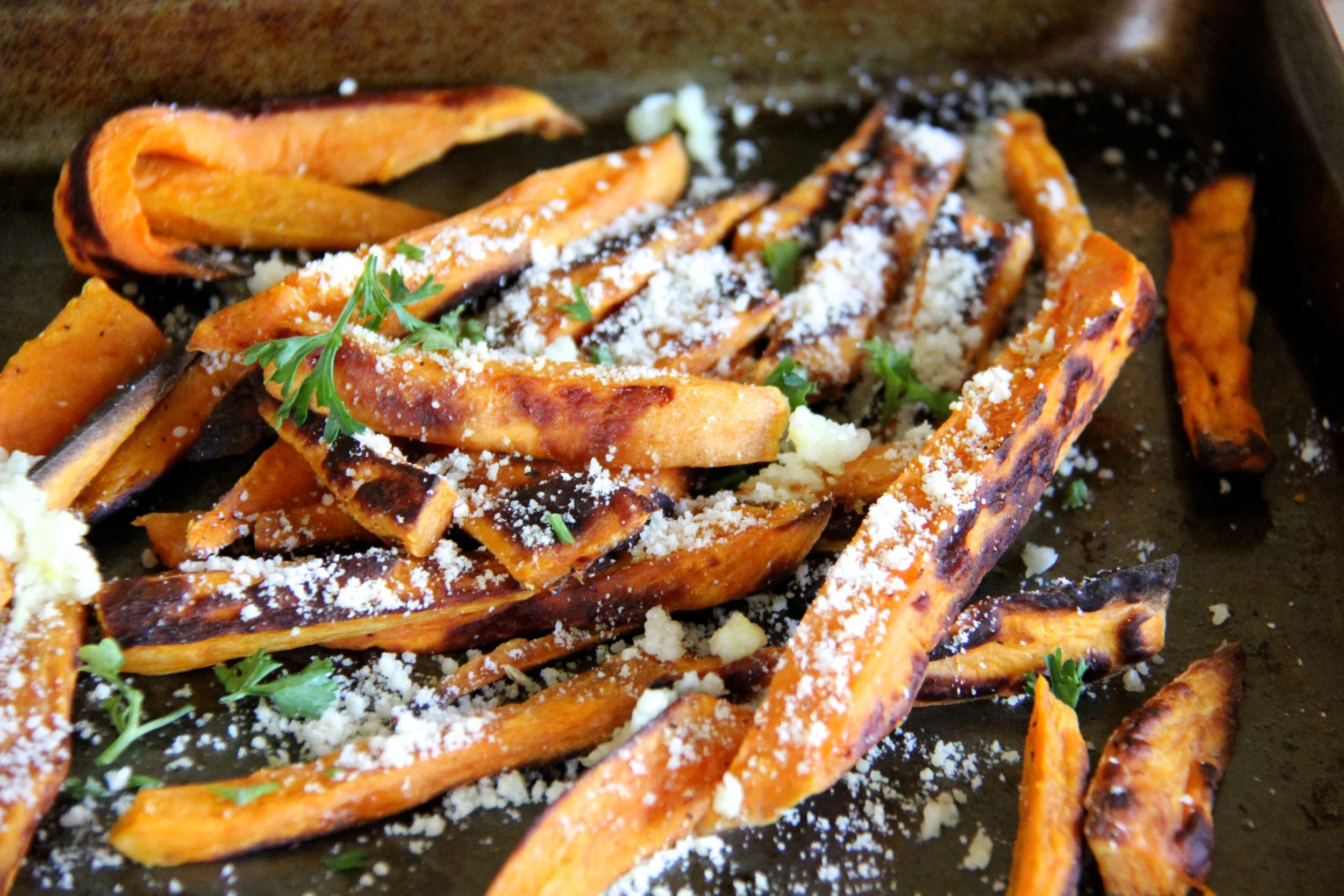
4. When warm, sprinkle Parmesan, garlic, and parsley over top.

Enjoy!

Mini Cauliflower Pizzas

I've always been a little weary about cauliflower pizza crusts... I mean, how good can they really be? Well, I searched out the best recipe for these I could find, and I'm glad I did the research. These are kid-proof, incredibly delicious, and EASY! Your kids are going to love them. Best part is that they are easy single-serving portions and only 98.5 calories each!! Can't beat that!

Yields 7-8 mini pizzas

*If you decide to make one large round crust, the cooking times may change slightly, so be watching it more carefully when it's in the oven.

Ingredients:

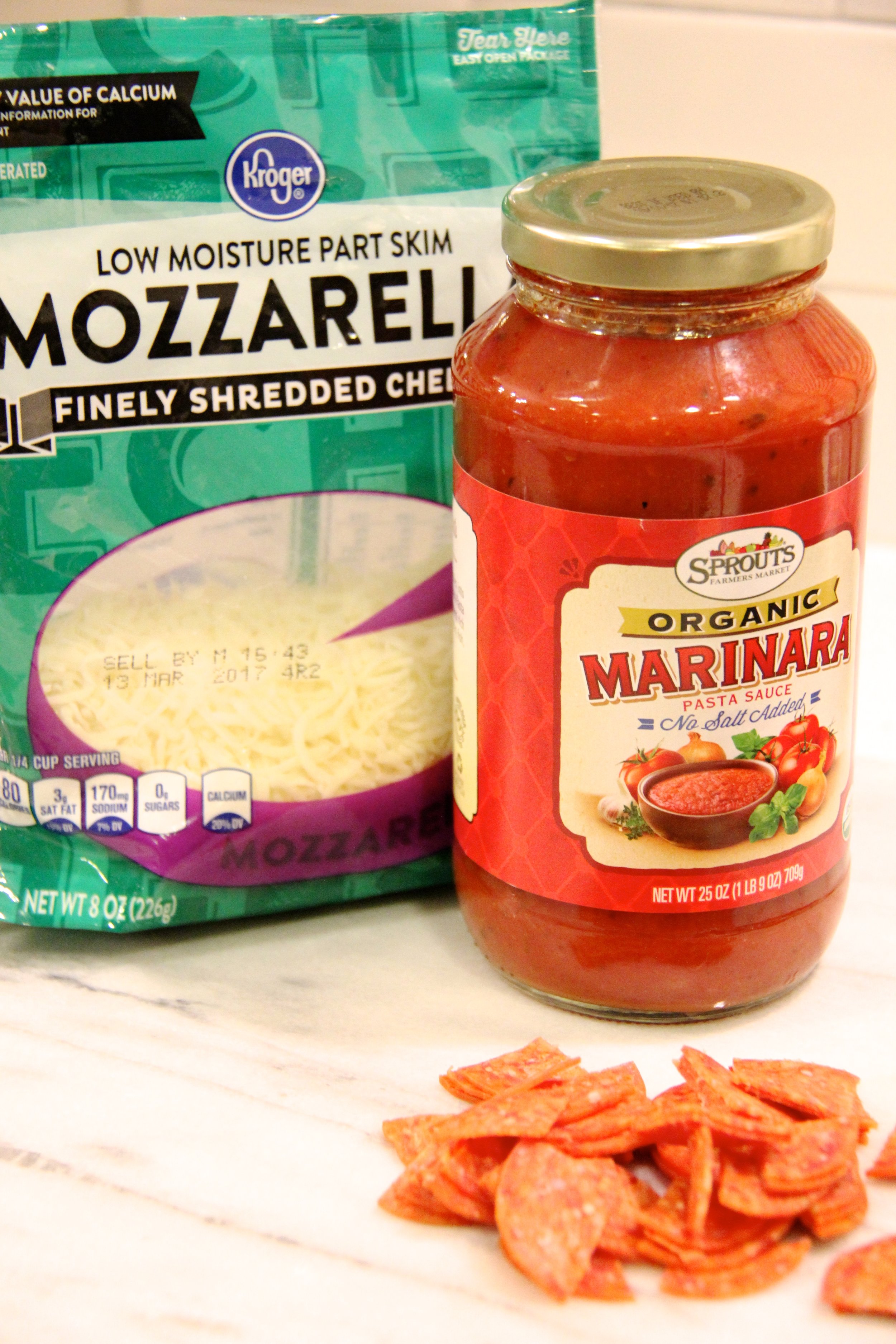
1/3 cup marinara sauce

1/2 cup shredded mozzarella cheese

1/4 cup pepperoni minis (*or cut regular sized pepperonis into fourths)

2 Tbsp. chopped fresh basil leaves

For the crust:

1 head cauliflower, chopped

1 large egg

1/3 cup. shredded mozzarella cheese

2 Tbsp. freshly grated Parmesan

1 tsp. dried basil

1/2 tsp. dried oregano

1/2 tsp. garlic powde

1/4 tsp. onion powder

Kosher salt and freshly ground black pepper, to tast

Instructions:

1. Preheat oven to 425 degrees. Line a baking sheet with parchment paper or tinfoil; spray with nonstick cooking spray and set aside.

2. To make crust, add cauliflower to the bowl of a food processor and pulse until finely ground, yielding about 2-3 cups. I did mine in my Blendtec, in two halves, and pulsed until it was finely ground up. 

3. Transfer to a microwave-safe bowl and heat for 4 minutes, or until softened. Using a clean dish towel or cheese cloth, drain cauliflower, if water is in the bottom of the bowl. 

4. Transfer cauliflower to a large bowl. Stir in egg, mozzarella, Parmesan, basil, oregano, garlic powder and onion powder; season with salt and pepper, to taste. 

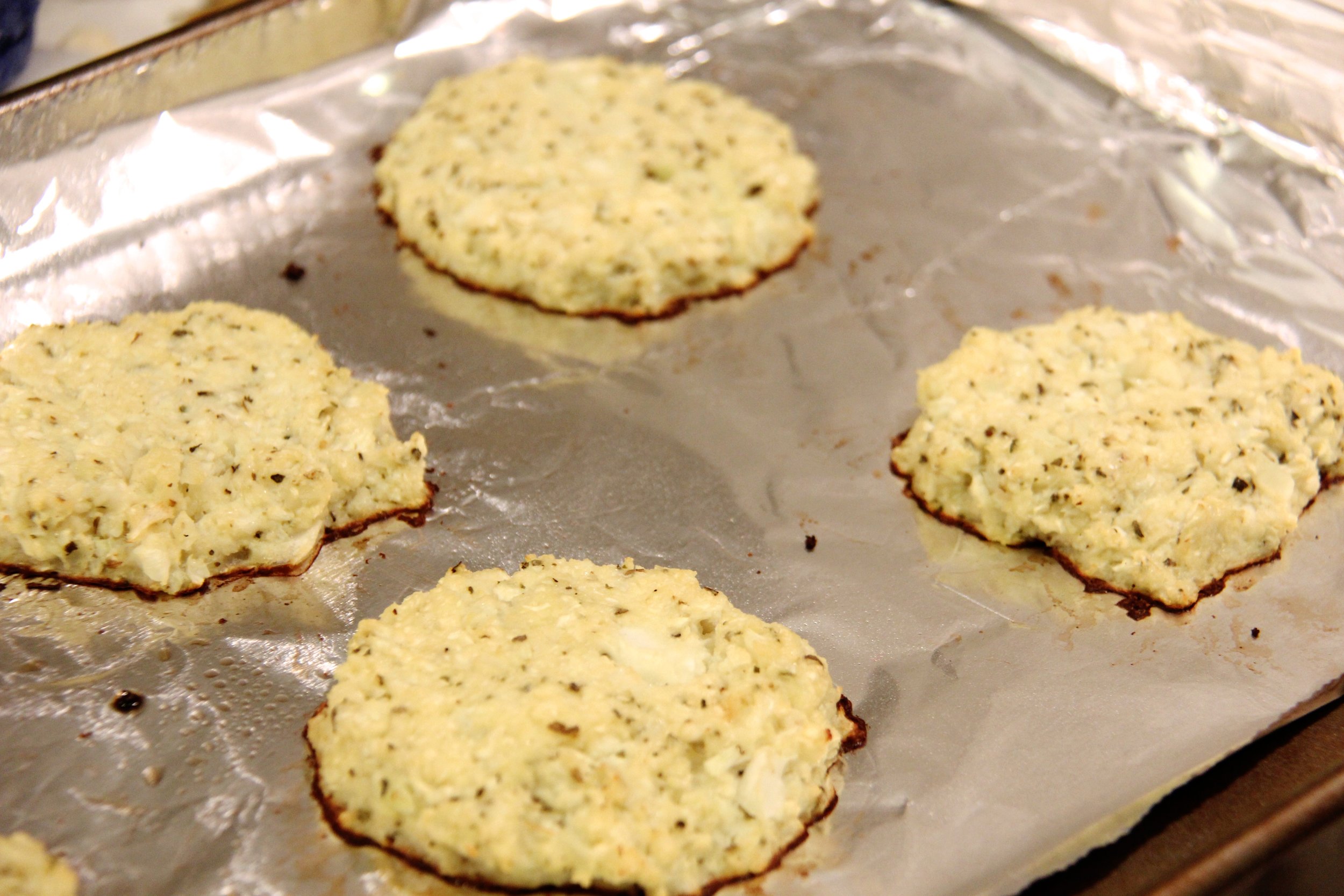
5. Using an ice cream scoop, spread cauliflower into a flattened circle for each mini pizza and place onto the prepared baking sheet. Make them thin! Bake for 10-12 minutes, or until golden.

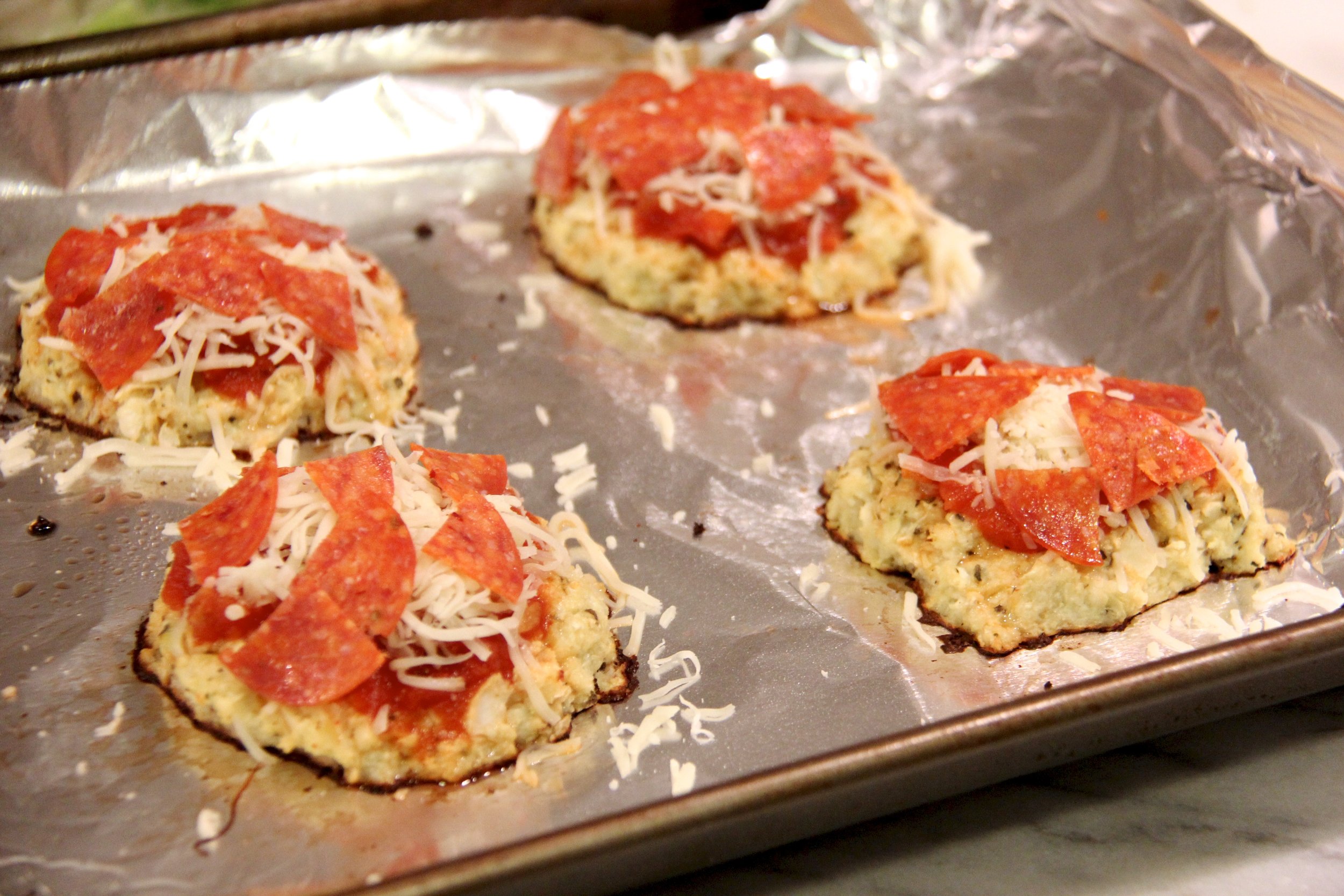
6. Top each pizza with desired toppings (marinara, mozzarella, and pepperoni minis). Place back into oven and cook until cheese has melted, about 3-5 minutes.

7. Serve immediately, sprinkled with basil, if desired. 

Enjoy!

Original recipe from Damn Delicious.

Stewart Falls

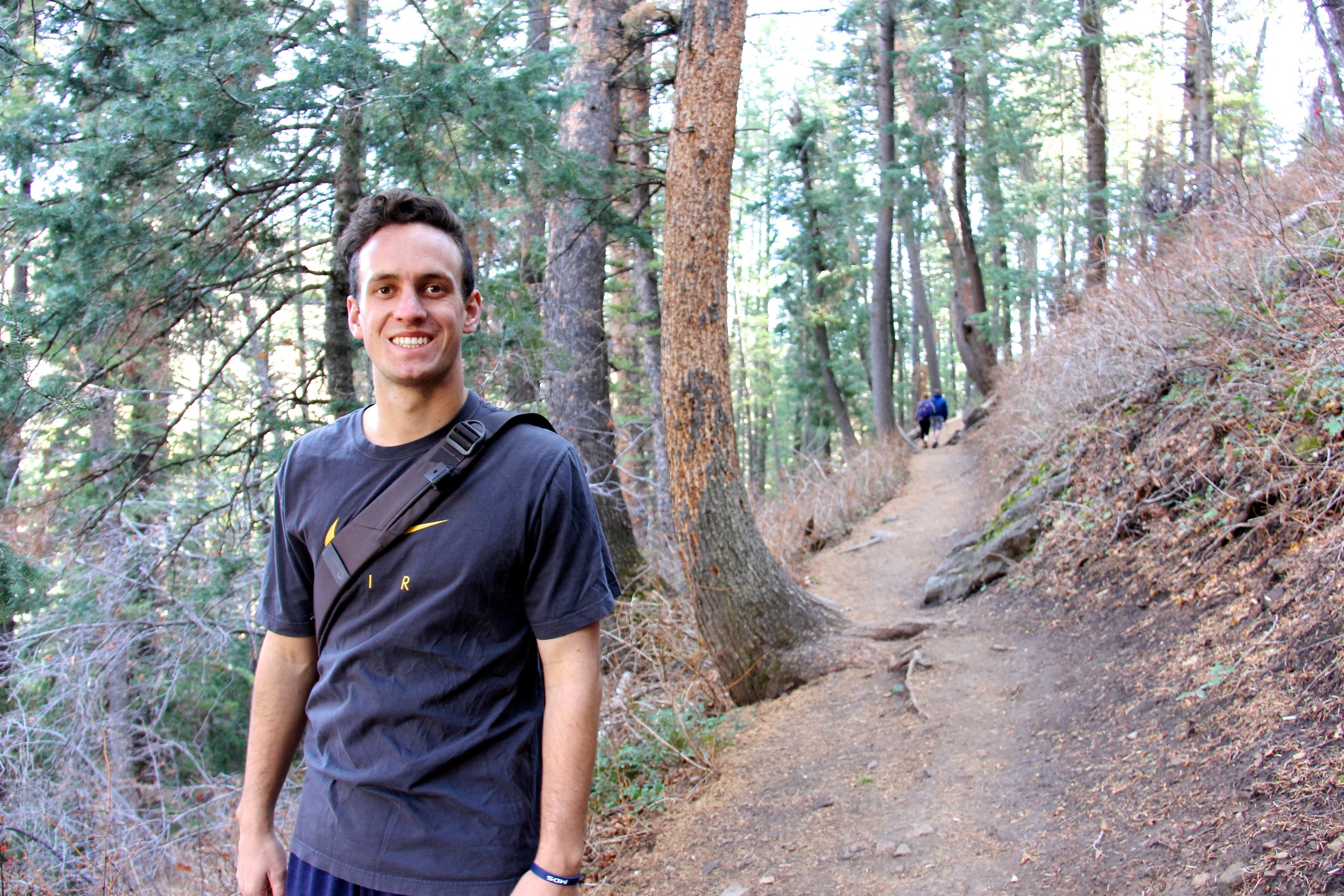
The sun is still out! Use those hiking trails while you still can! We just did this trail on Saturday and there is still no snow. I thought that even thought the colorful leaves had already fallen, it was still gorgeous. I can only imagine what this trail is like during the fall!! This is a kid-friendly and dog-friendly hike. Get out and give it a try!

Located near Sundance, UT

Distance: 4.2 miles RT, climbing ~1245 feet

Difficulty: Easy

Available: June - November

Dogs ARE allowed

I am excited to try this hike again next fall when the leaves are bright and colorful. It was an easy hike to the falls, and I was surprised by how beautiful the actual falls were. The waterfall has two tiers, and is over 200 feet tall. There is a spot to climb up to the upper falls, but the way up is slippery and I've heard from many people you have to be pretty careful. We just stayed at the bottom and enjoyed the view from there. The trail was well-marked and winds you through a forest on the east side of Mt. Timpanogos. There are restrooms at the trailhead, and also a place for a picnic. I thought overall it was a great hike and one I'd do again!

The negative things about this trail was that it cost us $6 just to park. We didn't realize the parking lot was right after the pay booth, and so next time we'll just park lower down and walk up to the trailhead so we don't have to pay.  Also, this trail was heavily trafficked! Even in early November! Even though there were many people on the trail, I didn't feel like it was overcrowded. It is spaced out nicely at the falls. Hope you get to go enjoy it before the snow rolls in.

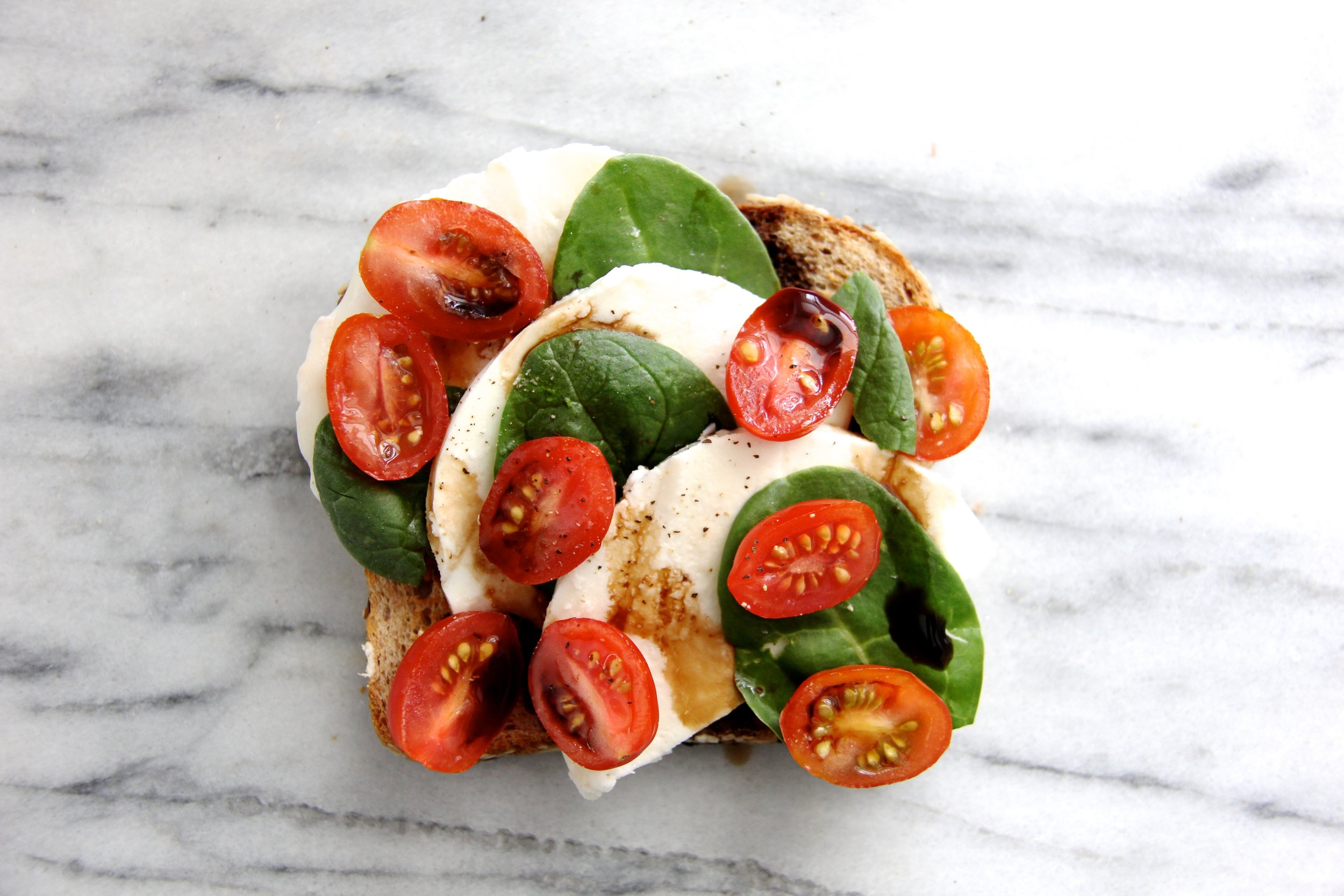
Caprese Toast

Don't know what to make for breakfast/lunch today? I've got you covered. Take this classic salad to a piece of Dave's Killer Bread, and you have yourself a meal on repeat.

Ingredients:

2 slices Dave's Killer Bread, or your favorite whole wheat bread

1 ripe tomato, or a small handful of grape tomatoes

6 thin slices of fresh mozzarella cheese

small handful of spinach

balsamic vinegar, to taste

salt and pepper, to taste

Instructions:

Toast your bread and top with mozzarella, tomatoes, spinach, and salt and pepper. Drizzle balsamic vinegar over top. Enjoy!

Cinnamon Apple Overnight Oats

Too delicious and easy to pass up!

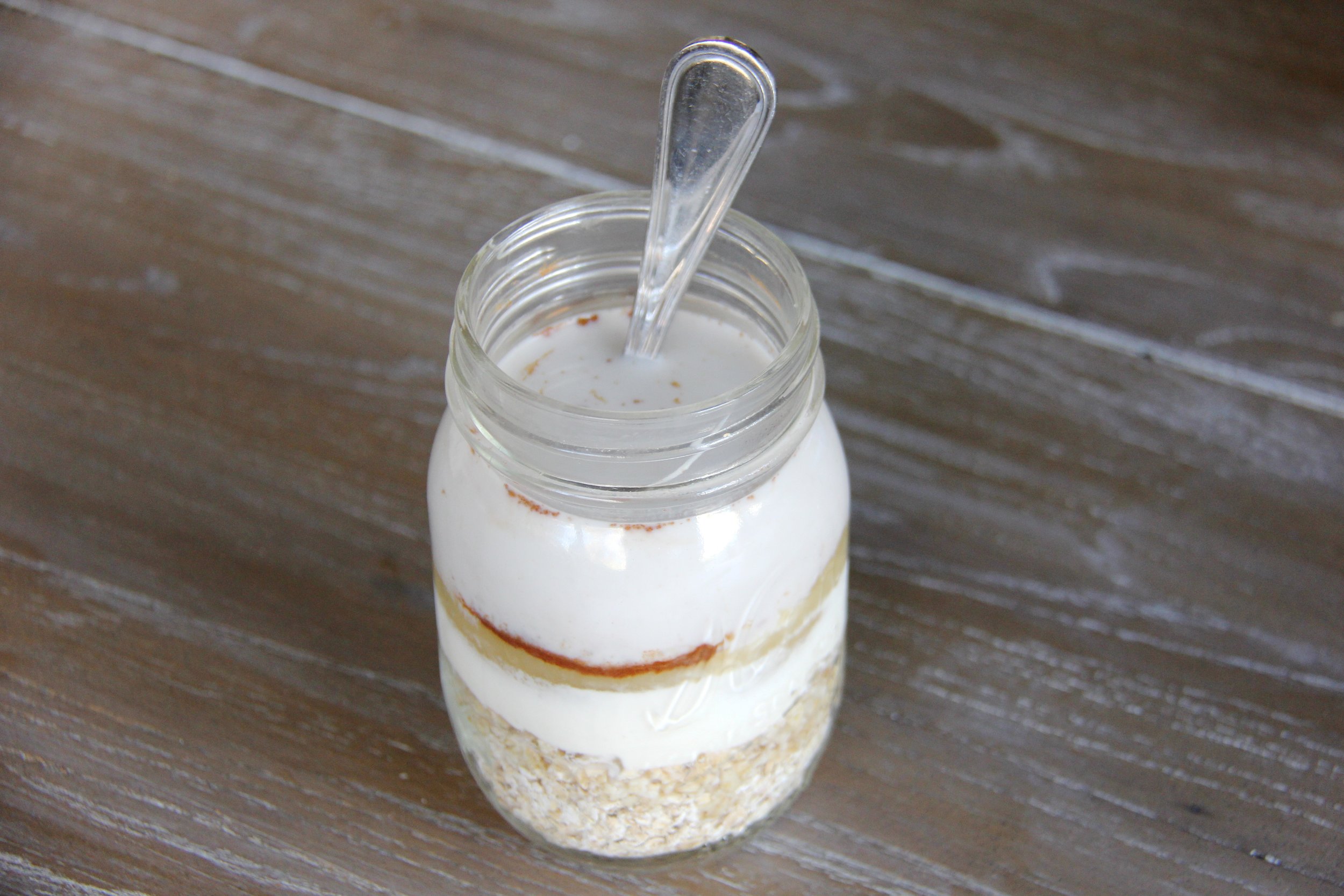
Grab some of those empty mason jars you have piled in your storage closet and put them to good use. A healthy and delicious breakfast using five ingredients and less than 5 minutes to make. Have I sold you yet?

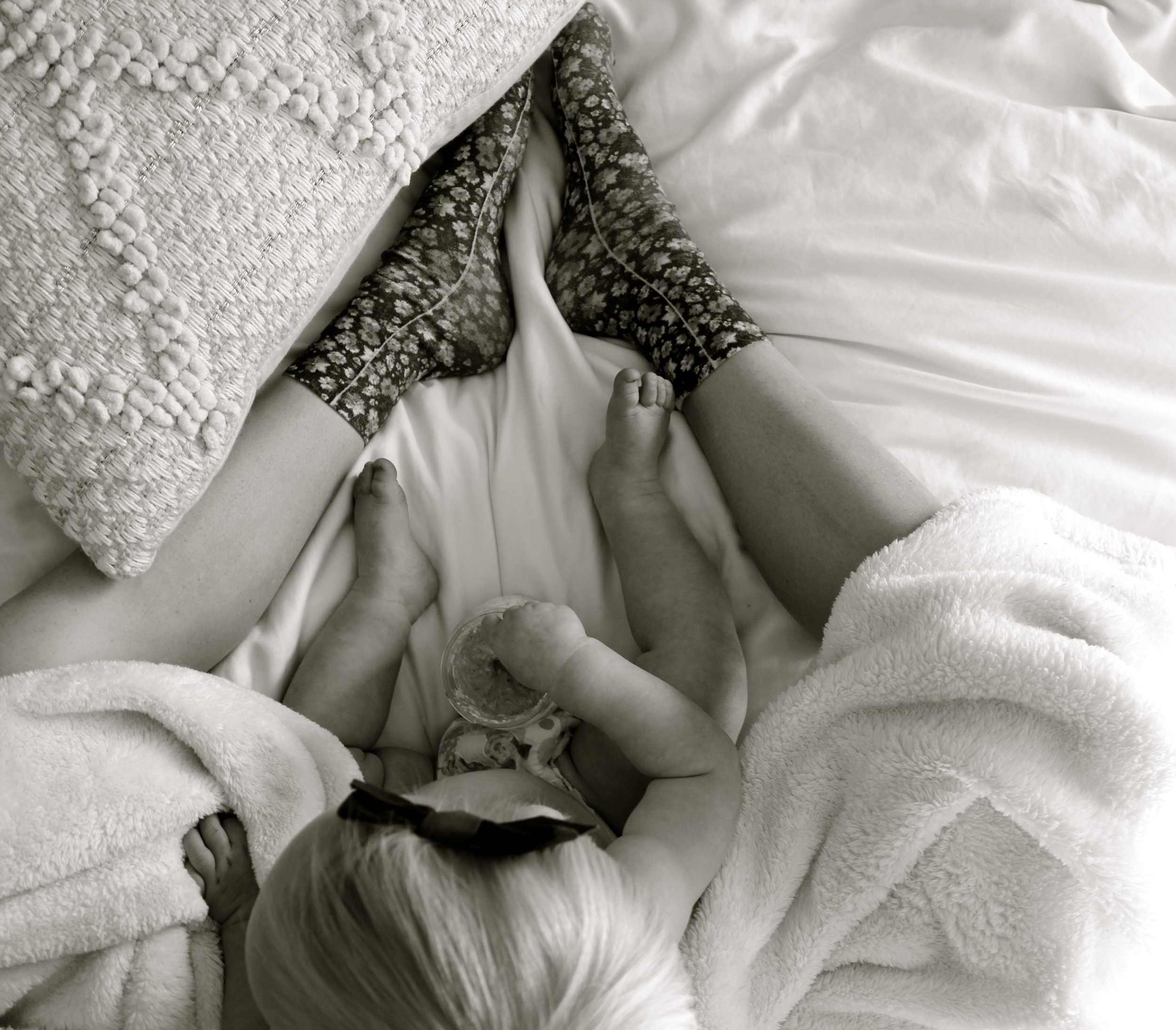
Ellie, my thirteen month-old, lops these up whenever I make them. Due to four teeth wanting to pop in at the same time (#help) we spent yesterday morning snuggling, reading books in bed, and figuring out what a belly button is. :)

Ingredients:

1/2 cup oats

1/4 cup plain Greek Yogurt

1/4 cup unsweetened applesauce

1/2 tsp. cinnamon

1/2 cup of your favorite almond milk (*mine is Califa Farms Toasted Coconut Almond Milk)

Instructions:

Layer ingredients, mix, and store overnight in your fridge. (If you want your oats more firm, you can leave it all layered in the jar without the milk and then add the milk before mixing in the morning. I like mine best with the milk mixed in and sitting overnight.)

Mix again in the morning, and you have yourself a delicious and healthy breakfast! Easy.

^Discovering her belly button. These moments make my mama heart happy.

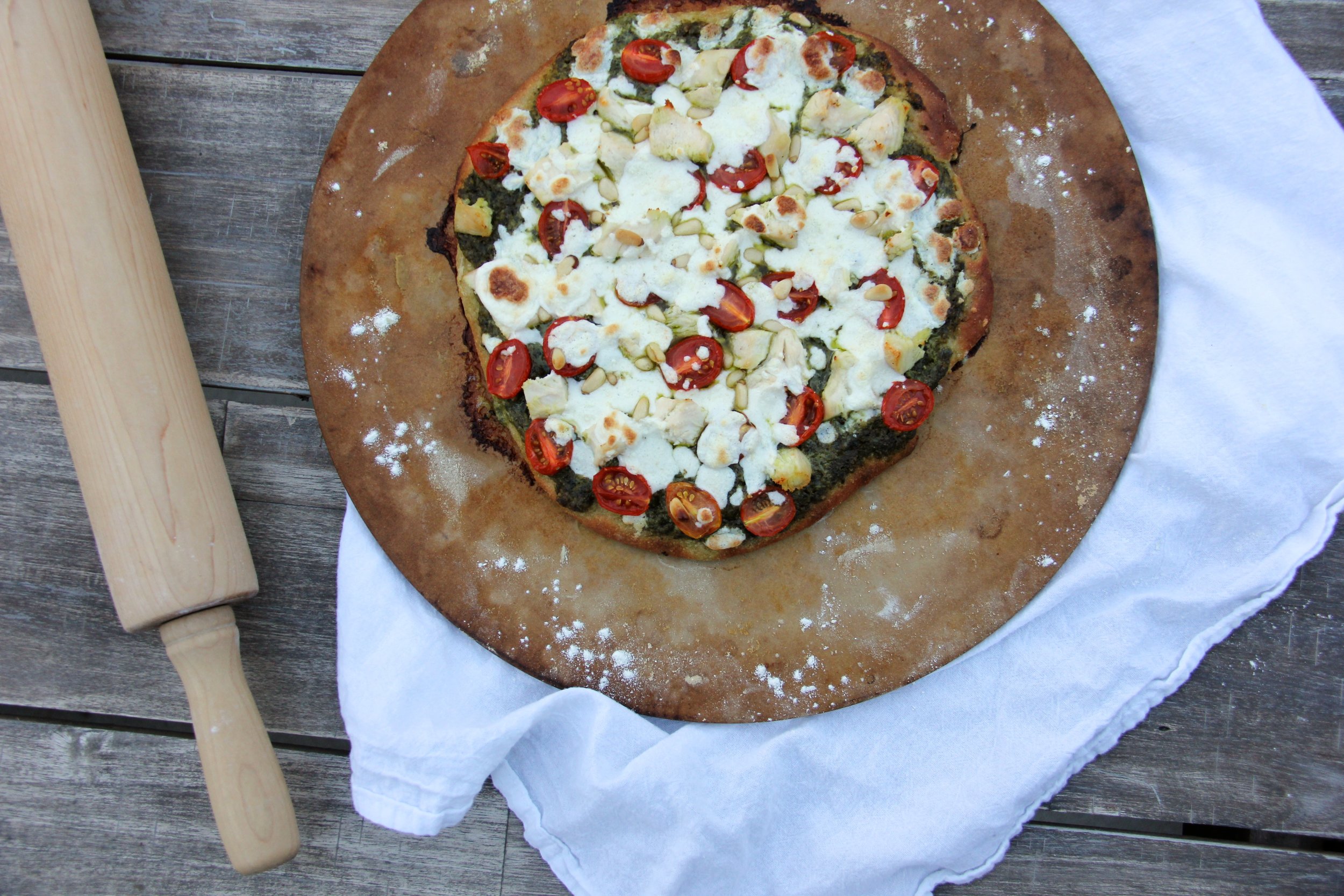
Kodiak Cakes Chicken Pesto Pizza

Who are my pizza lovers?

This morning I calculated the nutrition facts for both this pizza and a similar size pizza from Pizza Hut. The numbers side by side are staggering! This Kodiak Cakes Pizza had LESS THAN HALF the calories, ONE THIRD of the fat, HALF the carbs, and LESS THAN HALF the sodium content per slice. Definitely a healthier option than eating out, without compromising the taste. I know you'll love it. Give it a try! 

If you don't have Kodiak Cakes Flapjack and Waffle Mix, go to the store and grab yourself some. Most stores carry it now, and it's our "go-to" when it comes to pancakes!

Makes 2 smaller pizzas, serves 4-6

Ingredients:

3 cups Protein Packed Buttermilk Flapjack and Waffle Mix

3/4 tsp. sea salt (*I LOVE and recommend getting Redmond Real Sea Salt)

2 tsp. Instant Yeast

1 Tbsp. raw honey

3 Tbsp. Extra Virgin olive oil

3/4 cup warm water

Toppings:

tomatoes, basil pesto sauce, precooked shredded/diced chicken, pinenuts, tomatoes, mozzarella cheese

**We also made one plain margherita pizza... so choose your desired toppings!**

Instructions:

1. In a large mixing bowl (I used by Bosch), gently combine all ingredients.

2. The dough should not be too sticky- it shouldn't stick to your fingers. If it is sticking, add a little bit more Kodiak Cakes mix. If the dough is too dry and crumbly, gradually add more water. 

3. Knead the dough for approximately 5 minutes. Again, I just turned my Bosch on and let it do all the work. 

4. Divide the dough into two balls, and cover bowl with plastic wrap. Let dough sit and rise for 60-90 minutes.

5. Punch dough down, cover again, and let rest for about 10 minutes while you preheat the oven to 450 degrees and get your toppings ready.

6. Roll out one ball of dough on a lightly floured/nonstick surface, and prepare pizza with desired toppings. Bake at 450 degrees for 10-15 minutes. 

7. While first pizza is baking, repeat step 6 with the other ball of dough. We decided to do one chicken pesto pizza, and one margherita pizza. 

8. The crust should be golden brown when removing from the oven. ENJOY!!

Original recipe from here.

Diastasis Recti

Image taken from here.

Image taken from here.

Diastasis Recti (DR) is the separation of the large abdominal muscles, due to pregnancy. To be honest, I think pretty much every woman who has given birth experiences some separation in the beginning. For some, those muscles move back together quicker than others.

When the doctor says to not do any serious exercise for 6 weeks after giving birth, they mean it. Even though that can be the hardest 6 weeks of waiting ever (at least it was for me!), your body will heal much quicker when you wait to do heavy exercise, especially involving core work. With that being said, during that six weeks, I remember going on lots of walks and doing light exercise when I felt my body was ready to handle it. Listen to your body! Everyone's healing process is going to be different. And listen to your doctor. They didn't go through 10+ years of school for nothin'! The stuff they tell you is research-based!

Do you have it? Here's a self-test you can try:

1. Lie on your back with your knees bent, feet flat on floor

2. Place fingertips with palm facing you on your belly button

3. Lift your head and neck just slightly off the floor while you gently press down with your fingers. If there is a gap (2.7 cm. or greater), that is the diastasis.

4. Perform the same test just above and just below the belly button since the gap can measure differently in these places.

WHAT DOES CONTRACTING THOSE MUSCLES FEELS LIKE:

In order to help with DR, you will need to focus on working the deeper abdominal core muscles, or the transverse abdominis and internal abdominal oblique muscles. 

So how do you find them and what does it feel like to contract those muscles?

Lie on your side in sideline position with knees bent and one arm supporting head/neck with the front arm/hand placed in front of you. Let your stomach completely relax.  You will use that front hand to feel below your navel and to the inner side of your pelvic bone. Now focus on drawing your stomach inward and hold. See if you can feel that gentle tension happening in the core.  You should be able to feel those inner abdominal muscles. Feel what it's like to contract those muscles as you draw your stomach inward. Hold and breathe. Practice until you feel comfortable so you can use that technique on the exercises below.

Exercises to help:

Since you are trying to work your innermost abdominal muscles, these moves are going to be very Pilates-like and gentle on the muscles. Focus on feeling those innermost muscles contract with each movement.

Single leg lift:

Lie on your back with one leg straight and the other bent. Place your fingers on your lower abdomen. Contract the lower abs, and while exhaling, lift the straight leg up in the air and back down. Do 3 sets of 8-10 on each leg.


Heel Slide:

Lie on your back with both legs bent. Contract the lower abdominal muscles and as you exhale, slide on heel down the floor. Go as far as you can until you begin to feel your lower back lift off the floor. Pull the heel back in to starting position. Do 3 sets of 8-10 on each leg.

Back curl:

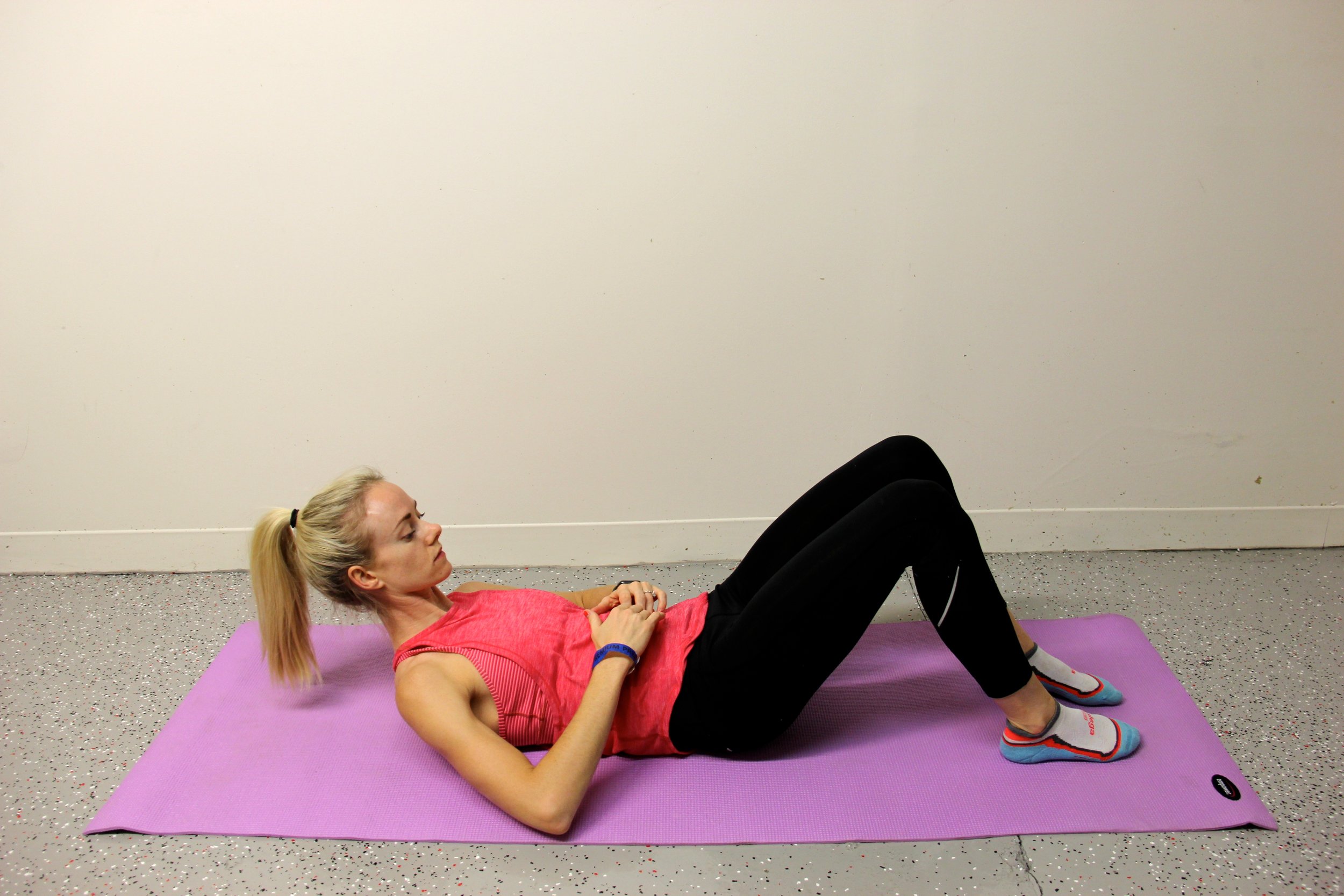
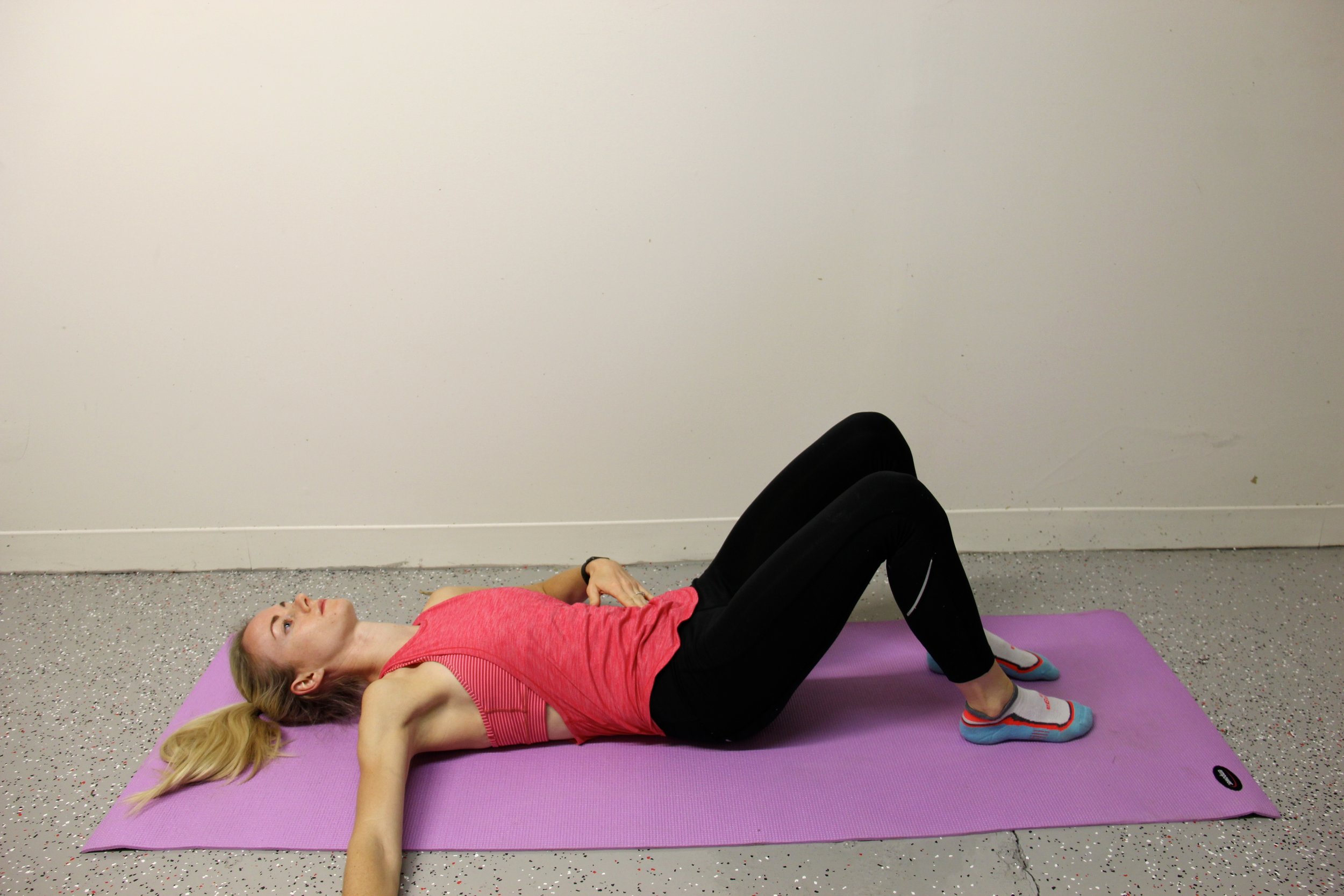
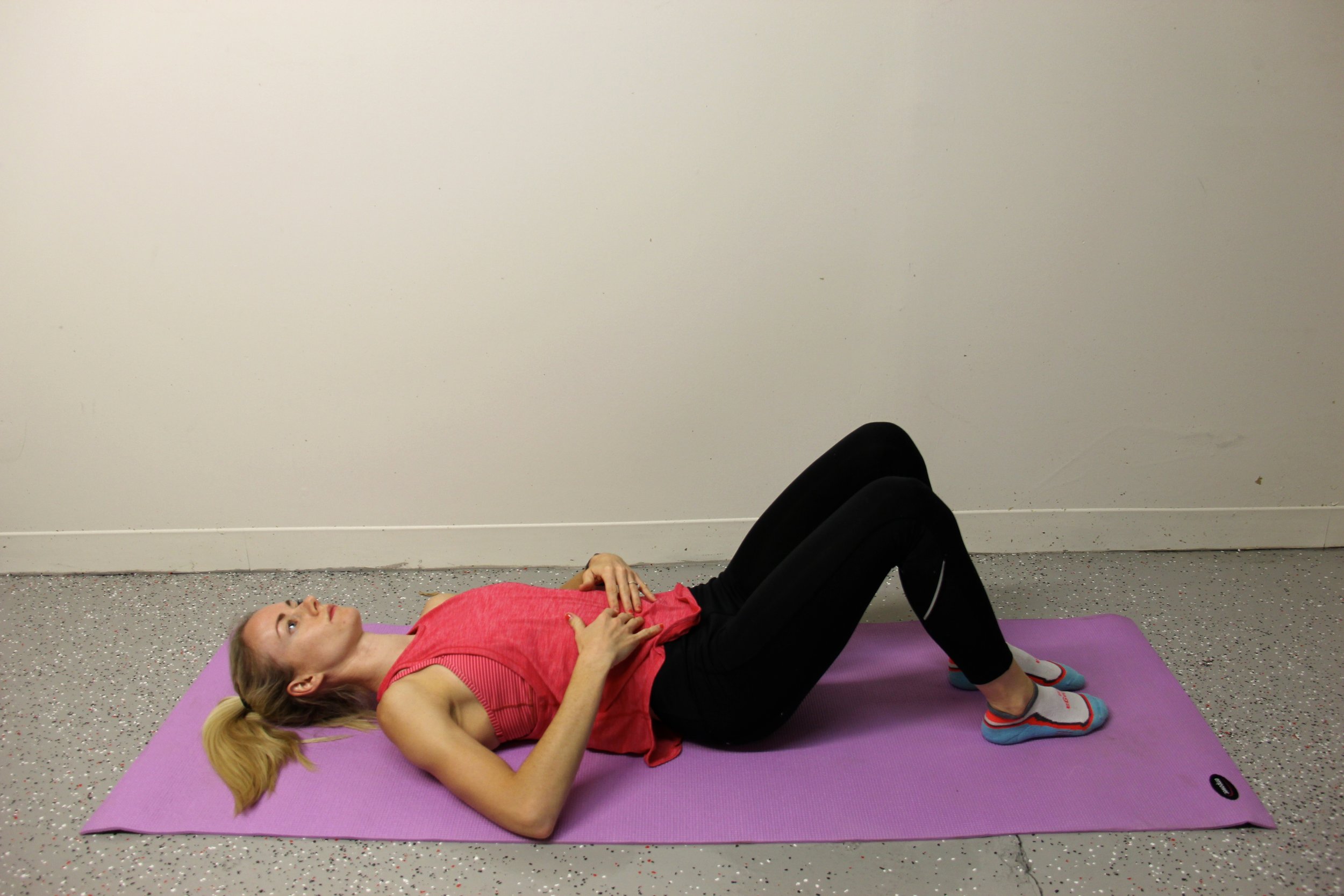
Lying on your back, you should feel a natural arch between the floor and your lower back. Pull this arch flat to the floor, and gently release. Focus on using those innermost muscles. Try 3 sets of 8-10. (It's kind of hard to tell from this picture, but I'm hoping the description will help!)

Bent Knee Fall Out:

Lie on your back with both knees bent. Contracting stomach, exhale and lower one knee slowly down toward the ground without letting your hips roll, and return leg back to the center. Try not to have any movement in the leg. Do 3 sets of 8-10 each leg.

Exercises to avoid:

Planks

Sit-ups

Heavy lifting or movements involving twisting of the spine

Crunches

Oblique curls

Reverse curls

Roll-ups

Backbends

**Any exercises causing strain on the midline or causing the belly to push outward

For another good video explaining some movements for DR, click here. She recommends to avoid planks, sit-ups, and movements putting too much stress on your abdominal muscles if you are less than 4 months postpartum or have greater than a 2 finger gap. She also gives great exercises for strengthening the pelvic floor, if you're interested.

An Important Reminder...

How are we talking about ourselves and our bodies? The children and little ones around us are listening, oh so carefully. Would we ever say the negative things we say about ourselves, to our children... or to our best friend... or to our mother? Than why do we have the right to say them to ourselves? We need more body positivity in this world, and it starts with each of us.

Today, throw those negative thoughts out the window and find gratitude for all your body can do! Practice saying three positive affirmations out loud to yourself in the mirror this morning. These can be things like, "I am strong," "I am capable," "I am a good wife," "I am a loyal friend," "I am forgiving..."  I do this every morning before anything else, and it has changed the way I live. It's hard to be negative about yourself when you start off your day with three powerful truths. Give it a try!

Find an article I wrote for @rubygirlorg about learning to love our bodies here.